
Many small business owners post on social media without a clear plan, hoping something will stick. The result is an inconsistent feed, fading follower interest, and the nagging feeling that you’re working hard for very little return. The good news is that effective content planning doesn’t require a marketing degree or a full-time social media team. With the right frameworks in place, even a one-person operation can build an audience that genuinely connects with their brand and keeps coming back for more.
Table of Contents
- Start with clear content pillars
- Apply the 80/20 rule for balanced content
- Create a flexible content calendar
- Measure, review, and optimise for growth
- Why rigid plans fail small businesses (and what to do instead)
- Take your content planning further with EasiSocial
- Frequently asked questions
Key Takeaways
| Point | Details |
|---|---|
| Build around content pillars | Choosing 3-5 core themes keeps your content focused and recognisable. |
| Balance value and promotion | The 80/20 rule ensures most posts build trust while still supporting your goals. |
| Stay consistent with a calendar | Regular scheduling avoids last-minute content stress and maintains audience interest. |
| Iterate based on results | Review analytics monthly to adjust your content plan for better performance. |
Start with clear content pillars
The most common reason small business social media fails is a lack of theme. One week you’re posting a product photo, the next a motivational quote, and somewhere in between a random meme that felt relevant on a Tuesday afternoon. Without structure, your audience can’t build a clear picture of who you are or why they should follow you.
Content pillars solve this problem at the root. They are the core themes or topics that your brand consistently talks about, acting as a framework that shapes every piece of content you create. Think of them as the chapters in your brand’s ongoing story.
As a rule of thumb, define 3-5 content pillars such as educational, inspirational, promotional, community-building, and behind-the-scenes. Each pillar serves a different purpose in building your relationship with your audience.
Here’s what each of those pillars typically covers:
- Educational: Tips, tutorials, how-to guides, industry insights, myth-busting posts
- Inspirational: Customer success stories, motivational quotes tied to your niche, transformation narratives
- Promotional: Product launches, limited-time offers, service announcements, testimonials
- Community-building: Questions, polls, user-generated content, shoutouts, local event involvement
- Behind-the-scenes: Day-in-the-life content, team introductions, process videos, workspace tours
You can explore examples of content pillars to see how different businesses apply these themes in practice. Once your pillars are in place, you also need to think about how you present each one. There are many format options for content pillars including short video, carousels, and static images that work particularly well depending on the platform.
Pro Tip: Once your pillars are defined, you can batch-create content by pillar. Dedicate one afternoon to filming three behind-the-scenes clips, another to writing five educational captions. This single habit saves hours every week.
Apply the 80/20 rule for balanced content
With your pillars established, the next challenge is knowing how much of each type of content to share. Many small businesses make the mistake of posting too much promotional content, which trains their audience to scroll past or even unfollow.
The 80/20 rule provides a clear, evidence-backed answer. 80% educational or entertaining content, with only 20% promotional, is the blend that builds audience trust over the long term. This doesn’t mean you never sell. It means you earn the right to sell by consistently offering value first.
Here’s an example of how that breaks down across a typical week of seven posts:
| Content type | Posts per week | Percentage |
|---|---|---|
| Educational | 2 | 29% |
| Inspirational | 1 | 14% |
| Behind-the-scenes | 1 | 14% |
| Community/engagement | 2 | 29% |
| Promotional | 1 | 14% |
Notice that even within the 80% non-promotional space, you have variety. That variety is what keeps your feed interesting and your audience engaged across different moods and intentions.
“Building trust with your audience through consistent, value-led content is what creates loyal customers rather than one-time buyers. Promotional posts land far better when they’re the exception, not the rule.”
The psychological reason this works is straightforward. When people feel that a brand consistently gives them useful or entertaining content without always asking for something in return, they become genuinely receptive when a promotion does appear. It feels like a recommendation from a trusted friend rather than a cold pitch.
Pro Tip: Scroll back through your last 30 posts and count how many were promotional. If more than a quarter were selling something, your feed may have trained your audience to disengage. A simple audit can reveal this pattern quickly.
Create a flexible content calendar
Knowing what to post and in what ratio is only useful if you actually execute consistently. That’s where a content calendar becomes your most valuable planning tool. It removes the daily question of “what do I post today?” and replaces it with a clear, pre-planned roadmap.
Building a practical monthly calendar doesn’t need to be complicated. Follow these steps to get started:
- Choose your posting frequency. Be realistic. Three well-crafted posts per week consistently will outperform seven rushed posts that quickly becomes unsustainable.
- Map your pillars to days. For example, Mondays could be educational, Wednesdays behind-the-scenes, and Fridays promotional or community-focused.
- Fill in key dates first. Mark product launches, seasonal events, holidays, and industry awareness days at the start of the month.
- Batch-write your captions. Once the calendar is mapped, write all your captions in one sitting. You’ll find your writing flows better with context around each post.
- Schedule using a tool. Use a scheduler to publish posts automatically so you’re not manually posting at peak hours every day.
- Leave 20% of slots empty. Reserve two or three spots each month for spontaneous or trending content. This keeps your feed feeling current and relevant.
You can find detailed content pillar strategies to help you assign themes across your calendar more effectively. For further reading on organising content for impact, structured video workflows in particular can be a game changer for businesses using short-form video regularly.
Pro Tip: Use colour-coding in your calendar spreadsheet to assign a different colour to each pillar. At a glance, you can immediately see whether your month is balanced or skewed towards one type of content.
One often-overlooked benefit of a content calendar is that it reduces creative burnout. When you’re not making reactive decisions every morning about what to post, you free up mental energy for the actual work of running your business. Planning is not just a marketing discipline. It’s an act of self-care for time-poor business owners.

Measure, review, and optimise for growth
Executing your plan is only the beginning. The businesses that grow consistently on social media are the ones that treat their content strategy as a living document, reviewed and refined on a regular basis.
Start by identifying the metrics that actually matter for your goals. Reach tells you how many people saw your content. Engagement rate (likes, comments, shares, saves divided by reach) tells you how much they cared. Conversions, whether that’s website clicks, enquiries, or purchases, tell you whether your content is driving real business results. Rely on social content management tools to track these figures in one place rather than logging into five different platforms.
The table below shows how different content types typically perform across these metrics:
| Content type | Average reach | Engagement rate | Conversion potential |
|---|---|---|---|
| Educational carousel | High | Very high | Medium |
| Short-form video | Very high | High | Medium |
| Promotional post | Medium | Low | High |
| Community question | Low | Very high | Low |
| Behind-the-scenes | Medium | High | Low |
This comparison highlights something counterintuitive. Promotional posts often have the lowest engagement but the highest conversion potential. That’s exactly why they work better when used sparingly within an otherwise engaging content mix, as the 80/20 rule recommends.
At the end of each month, ask yourself these review questions:
- Which three posts had the highest engagement, and what did they have in common?
- Which pillar consistently underperforms, and should it be adjusted or replaced?
- Did you stick to the 80/20 balance this month?
- Did your promotional posts generate any measurable enquiries or sales?
- What trending topics or conversations did you miss, and how could you plan for them next month?
These questions don’t require a data analyst. They require fifteen minutes of honest reflection. That brief monthly review compounds over time into a strategy that genuinely reflects what your specific audience responds to, rather than generic best practices copied from a competitor in a completely different industry.
Why rigid plans fail small businesses (and what to do instead)
Here’s an uncomfortable truth that most content planning guides won’t tell you: the more detailed and rigid your content plan, the more likely you are to abandon it by week three.
We’ve seen it countless times. A business owner invests a weekend creating a beautifully colour-coded calendar with content scripts for the next three months. By the time a product sells out, a customer posts a brilliant review, or a relevant story breaks in the news, that rigid plan has already made the calendar feel like a cage rather than a framework. Rigidity kills spontaneity, and spontaneity is often where the most authentic, high-performing content comes from.
The businesses that sustain genuine growth on social media treat their content strategy as a living process rather than a fixed document. They plan enough to stay consistent, but leave deliberate white space for experimentation, seasonal pivots, and responses to customer feedback. One boutique clothing brand we know abandoned its scripted editorial calendar in favour of a simple pillar-and-theme approach with weekly check-ins. Within two months their engagement had increased noticeably, simply because their content felt more human and less corporate.
This is the real discipline of flexible content planning: knowing when to follow the plan and when to break it. Batch-scheduling a month of content in advance is an excellent habit. But if a customer tags you in a post that deserves a response or a story worth sharing, respond to it. Post about it. Your planned content will still be there tomorrow.
The goal is a framework that makes consistency easy, not one that makes creativity impossible. Treat your pillars as guardrails, your calendar as a guide, and your analytics as a feedback loop. That mindset will serve you far better than any perfectly crafted plan that sits unused in a Google Drive folder.
Take your content planning further with EasiSocial
A clear framework is the foundation, but the right tools are what make consistent content planning genuinely effortless for small businesses.
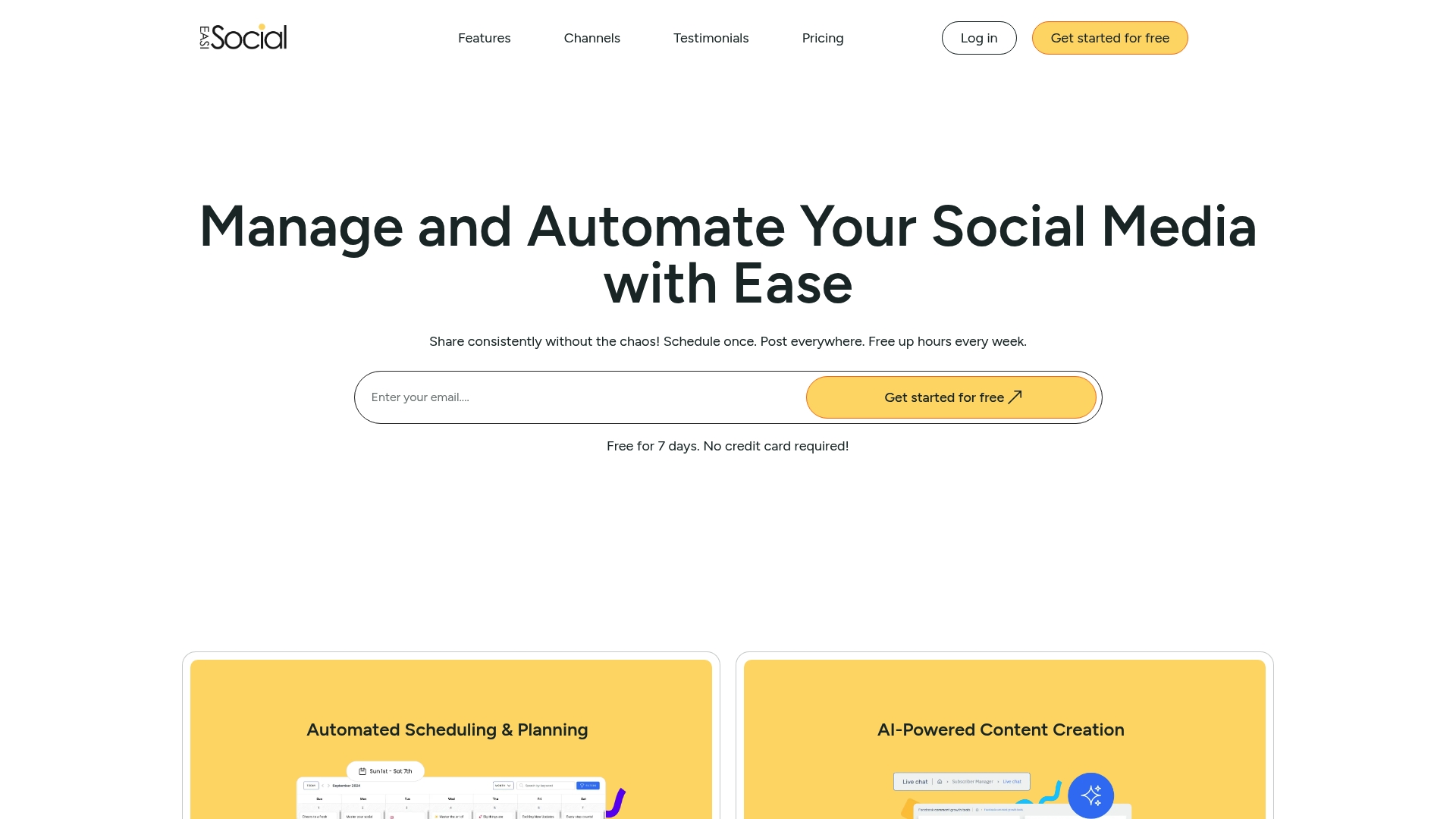
EasiSocial is built specifically for small business owners and consultants who want to manage their social media strategically without spending hours on admin. The EasiSocial toolkit brings scheduling, analytics, and content management into a single, intuitive platform, so you can apply everything in this article without juggling multiple tools. From tracking your pillar balance to reviewing engagement metrics at a glance, EasiSocial gives you the visibility you need to keep your strategy on track. If you’re ready to put your content plan into action, explore the lifetime access offer and get everything you need in one place.
Frequently asked questions
What are good content pillars for social media?
Educational, inspirational, promotional, community-building, and behind-the-scenes are five of the most effective pillars for building a balanced, engaging content plan across most industries.
How often should I post promotional content on social media?
Aim for roughly 20% of your posts to be promotional, following the 80/20 rule, so the majority of your content earns audience trust before you ask for anything in return.
Do I need to plan content months in advance?
Planning one month ahead is generally enough for most small businesses, provided you leave two or three flexible slots each week for spontaneous or trending posts that feel timely and relevant.
What is the best way to review social media content performance?
Track reach, engagement rate, and conversions monthly, and ask specific questions about which posts performed best, as recommended in social media planning guides, so your future content reflects what your actual audience responds to.